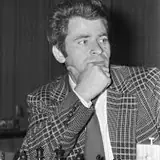
Boris Spassky
He had no single weapon, and that was the weapon. Boris Spassky could attack like Tal one game and grind like Petrosian the next, at home in a king-hunt or a queenless ending with equal ease — the most complete, universal player of his age. Out of a hungry wartime childhood he rose to take the crown from Iron Tigran himself, and then, in the most watched chess match ever played, he carried defeat with a grace the world has not forgotten: a champion who once stood and applauded the man who was beating him.
◈A child of the evacuation
Spassky was born in Leningrad on 30 January 1937, and the war very nearly took everything. He learned the moves at five while being evacuated from the besieged city, and some of his first chess was played on a train carrying children away from the front. Hunger and displacement framed those early years, and chess became both refuge and ladder.
The talent was unmistakable. At ten, in 1947, he beat the reigning World Champion Mikhail Botvinnik in a simultaneous display. Under his first trainer, the Leningrad master Vladimir Zak, he set a string of records as the youngest Soviet player to reach first category, candidate master and then Soviet master. In 1955 he won the World Junior Championship, and a year later, after sharing third in the Amsterdam Candidates Tournament, he was awarded the Grandmaster title — at nineteen, then the youngest in the world.
◈Two trainers, two temperaments
Spassky's chess was shaped by two very different men. Through his youth he worked with Alexander Tolush, a fierce attacker who fed the boy's natural taste for sacrifice and the open king. The combinational fire was real — but so were the swings, and the title kept slipping away.
In 1961 he changed hands, turning to Igor Bondarevsky, a calm strategist who taught discipline, balance and the patience to wait. The pairing was the turning point of his career. That same year Spassky won the Soviet Championship outright at Baku, and from the union of Tolush's fire and Bondarevsky's ice came the mature, all-sided style for which he is remembered.
◈The crown
His first shot at the title came in 1966 against Tigran Petrosian, and he lost it by the narrowest of margins — Petrosian became the first champion since Alekhine in 1934 to defend by winning. Spassky did not break. He fought back through the next Candidates cycle and returned in 1969 to face Iron Tigran again.
This time the result was reversed. Spassky won the match 12½–10½ and became the tenth World Chess Champion. He had beaten the hardest man in the world to beat — and he had done it by sheer completeness, matching Petrosian's defence and then overwhelming it with the attacking gifts the older champion could not contain.
◈The Match of the Century
In the summer of 1972, in Reykjavík, Spassky defended his title against the American Bobby Fischer in what the world called the Match of the Century. It was the Cold War poured onto sixty-four squares, the lone Western challenger against the whole Soviet chess machine, and it drew an audience chess had never known before or since.
Fischer's behaviour was chaos. He nearly forfeited the match before it began, demanded the cameras gone, and refused to appear for game two. Spassky, the champion, could have stood on his rights and kept the title by default; instead he made concession after concession so that the chess could happen. When Fischer produced a flawless game six, Spassky joined the audience in applauding his opponent. He lost the match 8½–12½, and lost the crown — but in defeat he won something rarer, a reputation for sportsmanship that outlived the title itself.
◈The universal style
What set Spassky apart was that he had no signature opening and no single mode — he was, in the word that follows him everywhere, universal, equally dangerous attacking, defending, and in the endgame. He revived the romantic King's Gambit at the highest level; his 1960 win over David Bronstein, a sacrificial storm in that very opening, was so vivid it was reproduced as the chess scene in the James Bond film From Russia with Love. As Black he brought the Marshall Attack back into fashion and developed the Leningrad Variation of the Nimzo-Indian.
The proof of his breadth is in the names he defeated. Spassky beat six undisputed World Champions at least twice each — Smyslov, Tal, Petrosian, Fischer, Karpov and Kasparov — a span of generations no contemporary could match. Fischer himself left the most quoted verdict on Spassky's composure: he sat, Fischer said, with the same dead expression whether he was mating or being mated.
◈Exile and the long evening
In 1974 he reached the Candidates semifinal but ran into the rising Anatoly Karpov, who beat him at Leningrad. Two years later Spassky emigrated to France, and in 1978 he became a French citizen, settling at Meudon near Paris and playing under the French flag. In 1992 he met Fischer once more, in a lavishly funded unofficial rematch in war-torn Yugoslavia; Fischer won again, but the meeting closed the circle between the two old rivals.
Strokes in 2006 and 2010 slowed him, and in 2012 he returned to live in Russia. He died in Moscow on 27 February 2025, aged 88. FIDE remembered him not only as one of the greatest players the game has produced, but as a true gentleman — the champion who taught that how you lose can matter as much as how you win.
“When you play Bobby, it is not a question if you win or lose. It is a question if you survive.”
“The best indicator of a chess player's form is his ability to sense the climax of the game.”
“Spassky sits at the board with the same dead expression whether he's mating or being mated.”
“He was not only one of the greatest players of the Soviet era and the world, but also a true gentleman.”
◈From the archive
◈Legacy
Spassky's reign was brief, but his place is permanent. He gave the game one of its few genuinely universal champions, a player with no weakness to aim at, and he gave it a model of conduct under pressure that has rarely been equalled. He is remembered for reviving the King's Gambit, for the Marshall and the Leningrad Nimzo-Indian, and for beating world champions across three generations — but most of all for the summer of 1972, when he lost the most famous match in chess history and still walked away admired. He was portrayed by Liev Schreiber in the 2014 film Pawn Sacrifice, and his death in 2025 was mourned across the chess world as the passing of an era.