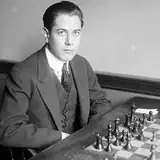
Jose Raul Capablanca
He made the hardest game on earth look like something a man does while thinking of other things. José Raúl Capablanca did not calculate so much as see — clarity arrived already finished, the winning line obvious the moment it left his hand. Opponents who had studied for weeks watched their positions dissolve in a few quiet, irrefutable moves and walked away unsure of where they had gone wrong. They called him the chess machine, but the truth was warmer than that: he was the player who proved that the deepest beauty in chess is simplicity, and that an endgame of two pieces can be as profound as any sacrifice.
◈The boy who beat his father
He was four years old, watching his father play in Havana, when he pointed out that a knight had moved illegally — and then, by his own account, sat down and beat him. The story has the polish of legend, but the chess that followed did not need embellishing. At eight he was a member of the Havana Chess Club; in 1901, two days short of his thirteenth birthday, he won a match against Juan Corzo, the champion of Cuba.
In 1905 he crossed to New York and enrolled at Columbia, where he played shortstop on the freshman baseball team — a game he privately preferred to chess his whole life. He left the university in 1908 to give himself fully to the board. Chess, he would shrug, was "not a difficult game to learn, and it is an enjoyable game to play." For him, perhaps. For everyone who had to face him, it was about to become very difficult indeed.
◈Conquest of the old world
In 1909 the unknown Cuban challenged Frank Marshall, the United States champion, and demolished him: eight wins, one loss, fourteen draws. It was a result that did not fit a newcomer, and it bought him an invitation to San Sebastián in 1911 — his first international tournament, against nearly every leading master alive. He won it, ahead of Rubinstein, Vidmar and Marshall, and took the brilliancy prize for his victory over Ossip Bernstein. A master of the elite had arrived without serving the usual apprenticeship.
What followed was a kind of travelling wonder. On his exhibition tours he won games by the hundred: in Cleveland in 1922 he faced 103 opponents at once and finished with 102 wins and a single draw. In 1913 the Cuban Foreign Office gave him a roving diplomatic post — a salary for life, and the freedom to be, in effect, his country's ambassador wherever chess took him.
◈The crown, and eight years unbeaten
Between 10 February 1916 and 21 March 1924 — more than eight years — Capablanca did not lose a single serious game: sixty-three games, forty wins, twenty-three draws, no defeats. No champion before or since has matched that stretch of invulnerability at the top.
At the heart of it stood Havana, 1921. Emanuel Lasker, who had held the world title for twenty-seven years, sat down across from him and could not win a game. Capablanca took four, drew ten, and Lasker resigned the match — the title passed to the Cuban without his losing once. He was the third World Chess Champion, and to many of his contemporaries he looked unbeatable, a man who simply did not make the mistakes other players made.
◈The chess machine
His genius was lucidity. Where others hacked through complications, Capablanca steered toward clarity, trading down into endings he understood better than anyone and winning them with a technique so smooth it looked like no effort at all. Bobby Fischer called it a "real light touch." The textbook he distilled it into, Chess Fundamentals (1921), Mikhail Botvinnik would call the best chess book ever written — and its first counsel was pure Capablanca: study the endgame before everything else.
He feared only one thing across the board: that perfect play would drain the game of life. To keep it from a "draw death," he proposed in 1925 a larger variant — a 10×8 board with two new pieces, the chancellor and the archbishop — so that opening theory could not, as he put it, settle the game before it began. It was the worry of a man for whom ordinary chess had grown almost too easy.
◈Buenos Aires, and the rematch that never came
In 1927 he went to Buenos Aires to defend the crown against Alexander Alekhine — a man he had never lost to, in a year he had just won the great New York tournament ahead of him. He arrived without serious preparation; Alekhine arrived having studied Capablanca's every game and trained his body like an athlete. Across thirty-four games, the longest world championship match for nearly sixty years, Alekhine won six to three and took the title. The chess world was stunned.
Capablanca wanted the rematch, and never got it. The terms, the money, the Depression, the bitterness between the two men, and finally the war all conspired against it; they did not even meet over a board again until Nottingham 1936. Yet the autumn years held real triumphs — first at Moscow 1936 ahead of Botvinnik, a share of first at Nottingham, a gold medal on top board at the 1939 Buenos Aires Olympiad. By then an undiagnosed, savage hypertension was already at work. On 8 March 1942, after collapsing the night before at the Manhattan Chess Club, he died of a cerebral hemorrhage in New York — in the same hospital where Lasker had died exactly one year before.
“In order to improve your game, you must study the endgame before everything else; for whereas the endings can be studied and mastered by themselves, the middle game and the opening must be studied in relation to the endgame.”
“I have known many chess players, but only one chess genius: Capablanca.”
“Capablanca was snatched from the chess world much too soon. With his death, we have lost a very great chess genius whose like we shall never see again.”
◈From the archive
◈Legacy
Capablanca founded no school and wrote no sprawling treatise, yet his influence runs through everyone who came after. Fischer, Karpov and Botvinnik all studied the way he simplified, the way he made a won position safe and a drawn one winnable. Computer analysis of the world champions' match play has rated him the most accurate of them all; Spassky thought him simply the best who ever lived. Since 1962 Havana has held the Capablanca Memorial in his honour. He remains chess's great argument for clarity — proof that the highest art is not the move nobody understands, but the move everybody wishes they had found.