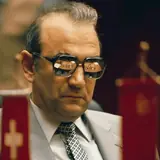
Viktor Korchnoi
Viktor Korchnoi spent his whole life one step from the summit, and he fought there longer and harder than anyone before or since. Twice he carried a challenge to the very last game of a world-title match, and twice he came up short; ten times he reached the Candidates. He has been called the greatest player never to wear the crown — but the phrase undersells him, because what he gave chess was not a title but a temperament: an unkillable will to fight, a counterpuncher's courage that never accepted a position was lost, and a refusal — even at the cost of his country, his family and his name — to be anything other than free.
◈A Leningrad childhood
Korchnoi was born in Leningrad on 23 March 1931, the son of a pianist mother and an engineer father, and he learned the moves at five from his father. From 1943 — while the city was still scarred by war — he came up through the Leningrad Pioneers' Palace under the trainers Abram Model, Andrei Batuyev and Vladimir Zak, the same forge that shaped a generation of Soviet masters.
He was Soviet Junior Champion in 1947 and again, in a tie, in 1948. The titles came in steady steps after that: Soviet Master in 1951, International Master in 1954, and the Grandmaster title in 1956. There was nothing precocious about it and nothing easy — Korchnoi built his strength the way he played, by refusing to stop.
◈Four times champion of the Soviet Union
Between 1960 and 1970 Korchnoi won the Soviet Championship — the strongest national event on earth — four times: Leningrad 1960, Yerevan 1962, Kiev 1964–65 and Riga 1970. In a field thick with world champions and future world champions, he stood out as the supreme fighter, a man who played for the win and signed fewer draws than almost any of his peers.
His method was counterattack. Where others sought the initiative, Korchnoi would invite the blow, absorb it, and strike back from a crouch — which made him a nightmare for the great attackers. Against Mikhail Tal, the most dangerous sacrificer of the age, he finished his career a remarkable +13 −4 =17 to the good. Over a span of decades he beat nine undisputed world champions outright — Botvinnik, Smyslov, Tal, Petrosian, Spassky, Fischer, Karpov, Kasparov and Carlsen — a feat matched only by Paul Keres and Alexander Beliavsky.
◈1974: the title match that never was
By 1974 Korchnoi had reached the Candidates final, the last gate before a shot at the world title. Across the board sat a rising twenty-three-year-old, Anatoly Karpov, and the Soviet machine had quietly thrown its weight behind the younger man: Korchnoi found himself virtually unable to recruit a single grandmaster to help him prepare. He lost the match by the narrowest possible margin, 12½–11½.
Then history played its cruellest trick. When Bobby Fischer refused FIDE's terms and would not defend in 1975, Karpov was awarded the championship without a single game being played. The man Korchnoi had pushed to the very brink became World Champion by forfeit — and the closest thing to a real title match in that cycle had been the one Korchnoi lost by a point. The seed of the bitterest rivalry in chess history had been planted.
◈The defection
In 1976, at the IBM tournament in Amsterdam, Korchnoi decided he had had enough of the system that hemmed him in. At the end of the event he asked the English player Tony Miles to spell out the words “political asylum,” then walked into a police station and defected — the first strong Soviet grandmaster ever to do so.
The price was savage. He was stateless for years before taking Swiss citizenship in 1979, and he was forced to leave behind his wife Bella and his son Igor, who was later drafted and imprisoned for evading military service; they were not allowed to emigrate until 1982. At home he became a non-person, his name struck from the record. He had chosen, as he later put it, freedom — and he would spend the next years proving across the board that they could not break him.
◈Baguio and Merano
The defector answered in the only language that mattered. Korchnoi won two consecutive Candidates cycles to earn the right to challenge Karpov for the world title — not once but twice. The 1978 match at Baguio City in the Philippines became one of the most poisonous in chess history, fought amid open hostility and a haze of accusations; at one point Korchnoi's camp protested a blueberry yogurt delivered to Karpov mid-game, suspecting it carried a coded message. Down 5–2 in a race to six wins, Korchnoi summoned an astonishing comeback to level the match at 5–5 before losing the deciding 32nd game. The final score: 6–5, with 21 draws.
Three years later he challenged again, at Merano in 1981 — and this time Karpov, in his prime, was overwhelming. The “Massacre in Merano” ended 6–2 with ten draws. Korchnoi was fifty, twice a challenger, and twice turned away at the last door. He never stopped believing he had been the stronger player; the scoreboard simply never agreed.
“When I defected it was because of chess, not politics. I wanted to be a free person. Freedom is my essential stance.”
“The greatest player never to have been world champion.”
“[Korchnoi] has contributed substantially to the popularisation of our sport.”
◈From the archive
◈Legacy
What set Korchnoi apart was that he never stopped. He won the World Senior Championship in 2006 at seventy-five — the oldest player in the FIDE top 100 that year — took the Swiss Championship at seventy-eight and again at eighty, and in 2014 played a two-game match against Wolfgang Uhlmann whose combined age was 162. His playing career stretched across some seven decades. He left three openings bearing his name, an autobiography fittingly titled Chess is My Life, and a duel with Karpov so charged it helped inspire the musical Chess and the film Dangerous Moves. He died in Wohlen, Switzerland, in 2016, aged eighty-five. Chess does not remember him for a crown he never won, but for the thing that crown could never have measured: a will to fight that outlasted everything — exile, age, and every opponent who ever sat across from him.