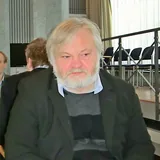
Artur Yusupov
Three times he climbed to within two matches of the world title, and three times the last door held shut against him. Artur Yusupov was never world champion, yet for a decade he was one of the very strongest players alive — a methodical, deep-thinking craftsman who reasoned his way through positions rather than gambling on them. He survived a burglar's bullet, rebuilt his life in a new country, and then did something rarer than winning a crown: he taught a generation how to think, pouring the discipline of his own play into the finest training books the game has produced.
◈A Moscow prodigy
Artur Mayakovich Yusupov was born in Moscow on 13 February 1960, into the great Soviet chess machine that was then producing world champions almost on schedule. He rose through its junior ranks with quiet assurance, and in 1977, at seventeen, he won the World Junior Championship — a title that carried with it the international master norm and announced him as a coming force.
The grandmaster title followed in 1980, but the proof of his class had already come a year earlier: on his very first appearance in the brutally strong USSR Championship, in 1979, Yusupov finished second, behind only the veteran Efim Geller. He was, from the start, a player who belonged among the best.
◈The partnership with Dvoretsky
The defining relationship of Yusupov's career was with Mark Dvoretsky, the most celebrated trainer of the age. The two formed an alliance that went far beyond ordinary coaching, and Yusupov credited Dvoretsky's influence as instrumental in his biggest victories. Together they founded the Dvoretsky–Yusupov Chess School, whose pupils included Peter Svidler, Sergei Movsesian and Vadim Zvjaginsev.
Their collaboration shaped the style for which Yusupov became known. The Soviet master Alexei Suetin described him as a player of rational, positional method, with high technical skill in the endgame and detailed mastery of his opening systems — a man whose every move, Suetin wrote, was grounded in industrious study rather than inspiration. Yusupov became a recognized authority on the Petroff Defence and a noted innovator in the old Lasker Defence to the Queen's Gambit.
◈Twice the world's third
Through the 1980s Yusupov was a fixture in the global elite. He reached world No. 3 in July 1986 and would hold that ranking again, and his rating climbed to a peak of 2680 in July 1995. Tournament victories accumulated across the decade and beyond — Esbjerg in 1980, Yerevan in 1982, first place at the Tunis Interzonal in 1985, a share of first at the Montpellier Candidates Tournament that same year, and later wins at Hamburg in 1991 and Amsterdam in 1994.
He was also a pillar of the Soviet Olympiad teams of the era, adding team golds to a record that placed him firmly among the small handful of players the world's best genuinely feared to meet.
◈So close to the summit
Three times Yusupov fought his way into the Candidates semifinals — the last barrier before a challenge for the world title — and three times he was turned back: by Andrei Sokolov in 1986, by Anatoly Karpov in 1989, and by Jan Timman in 1992. The World Championship match he so plainly deserved never came.
Yet from that near-miss era came his immortal game. In the 1991 Candidates quarterfinal against Vassily Ivanchuk at Brussels, the classical games could not separate them, and the match spilled into a rapid tiebreak. There, with the black pieces in a King's Indian, Yusupov launched a thunderous attack on Ivanchuk's king and won a game of such ferocity and beauty that in 1996 a jury of grandmasters and readers for Chess Informant voted it the finest game played in the thirty years from 1966 to 1996. The man celebrated for cool, rational play had produced one of the great attacking masterpieces of the century.
◈A bullet, and a second life
Around the same time, violence nearly ended everything. Returning to his Moscow apartment one day in the early 1990s, Yusupov came upon burglars; in the struggle that broke out he was shot, and he counts himself lucky to have survived. Soon afterward he left Russia for Germany, which became his permanent home.
In that second life he became something more lasting than a contender. With Dvoretsky he produced the Secrets of... series for advanced players, then authored his own complete training course — Build Up Your Chess, Boost Your Chess and Chess Evolution — nine graded volumes that won wide acclaim and major book awards, guiding readers from fundamentals to mastery. Named a FIDE Senior Trainer in 2005, he served as a second and advisor to Viswanathan Anand and Peter Leko in their World Championship campaigns, lending his depth to the very summit he had never quite reached himself.
“A player with a rational, positional style. He boasts high technical skill in the endgame and detailed knowledge of his customary opening systems. Least of all does he rely on inspiration; his every move is based on industrious study.”
◈From the archive
◈Legacy
Yusupov never reached a World Championship match, but few players have given chess more. As a competitor he was twice ranked third in the world and three times a Candidates semifinalist, leaving behind the Ivanchuk tiebreak — voted the greatest game of its era. As a teacher he and Mark Dvoretsky built a school that shaped Peter Svidler, Sergei Movsesian and others, and as an author his award-winning Build Up Your Chess and Boost Your Chess courses became a complete grammar of improvement for players across the world. Made a FIDE Senior Trainer in 2005 and a trusted second to Viswanathan Anand and Peter Leko, he is remembered as proof that a great player's deepest legacy can be the champions he raises rather than the title he never won.