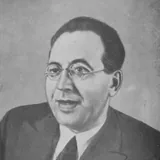
Grigory Levenfish
He beat Alekhine, he beat Lasker, and he held Botvinnik level when the whole machinery of a state had decided Botvinnik should win — three men who wore or would wear the world crown, all of them met across the board by a chemical engineer who built glass factories by day and masterpieces by night. Grigory Levenfish was a master of the old Russian empire who chose to stay through the Revolution and became one of the strongest players the young Soviet Union produced. The state never thanked him for it. They withheld his stipend, refused him the trips abroad his rank had earned, and quietly starved a great career. He never complained. He simply kept winning, kept teaching, and left behind the endgame book the whole world still learns from. He is the grandmaster history filed in its footnotes — but the footnotes of giants.
◈A master of the old empire
Levenfish was born in 1889 in Piotrków Trybunalski, in the Polish corner of the Russian Empire, to a Jewish family. He took a serious profession before he took chess seriously, training as a chemical engineer at the Saint Petersburg Institute of Technology — a discipline that would feed him, and frustrate him, for the rest of his life. But the talent was unmistakable. He won the Saint Petersburg City Championship in 1909, and in 1911 he travelled to Carlsbad for the only major tournament he would ever be permitted to play outside Russia.
He belonged, by temperament, to the imaginative school: a player of deep positional understanding with a keen eye for the brilliant, unexpected move. In 1913, still a young master, he sat down against the rising Alexander Alekhine — a future World Champion then carving his name into the European elite — and beat him. It was the first of the champions he would topple.
◈Chess in a country remade
The Revolution of 1917 swept away the world Levenfish had been born into. Many of his peers fled west; he stayed. Through the hungry, dangerous years of the early Soviet state he became one of its strongest players, winning the Leningrad championships of 1922, 1924 and 1925 and placing near the top of the early USSR Championships.
The proof of his class came at the great Moscow International of 1925, the first tournament that brought the world's elite into the new Soviet Union. There, across the board from Emanuel Lasker — the towering second World Champion, still formidable — Levenfish won. He now had two world champions among his scalps, and the chess world was beginning to understand that the engineer from Piotrków was no provincial talent.
◈Two crowns at home
His best years came in the mid-1930s. In 1934 he shared the Soviet Championship with Ilya Rabinovich at Leningrad, and in 1937 at Tbilisi he won it outright — twice the champion of the deepest pool of talent in the chess world.
Then came the match that defined him. As reigning Soviet champion he was called to defend his title in 1937 against Mikhail Botvinnik — already ranked among the very best on earth and groomed by the state as the coming World Champion. Over thirteen games Levenfish refused to break, holding Botvinnik to a 6½–6½ draw (+5 −5 =3) and keeping his title. He inflicted five defeats on a man who would lose only a handful of games against the entire world elite in those years. On the board, the old master had proved his equal.
◈The outcast
And it changed nothing. Levenfish did not receive the monthly stipend to which his grandmaster standing nominally entitled him — punishment, it was said, for an independent tongue and a refusal to bend to Soviet norms. When the legendary AVRO tournament was assembled in 1938 to gather the world's top eight, Levenfish, who had just held Botvinnik level, was left off the list: the regime preferred the youth it could call the future to a pre-revolutionary master it cast as the past.
So he supported himself, and his chess, by his profession. He designed, built and rebuilt eighteen glass-producing factories across the Soviet Union, carrying the civilian rank of engineer-major. Genna Sosonko, who collected the memories of those who knew him in Russian Silhouettes, drew a portrait of a man of integrity and independence who never once complained of his hardships — erudite, broad in outlook, interested in everything, standing out sharply against the grey background of his time.
◈The endgame scholar
If the state denied him a stage, it could not deny him a legacy. In 1957 Levenfish published Rook Endings with the young Vasily Smyslov — a book that became, and remains, a cornerstone of endgame literature, the standard work on the most common and most treacherous of all endings. Smyslov, a future World Champion, freely admitted that the hard scholarship had been his co-author's.
Late in life he set down his own story in Selected Games and Reminiscences, published after his death; its English translation carries the title that says everything — Soviet Outcast. Boris Spassky met him by chance in a Moscow subway shortly before the end, visibly frail. Levenfish died in Moscow in 1961, his name, as Sosonko wrote, surviving in the chess history of the century only in footnotes — the footnotes, all the same, of the very greatest games.
“An unusual individual, a highly erudite man, who stood out sharply against the grey background — a man of broad outlook, interested in everything: politics, science, art.”
“In the chess history of the last century, his name can be found only in footnotes.”
◈From the archive
◈Legacy
Grigory Levenfish gave Soviet chess two championships, a long list of beaten champions, and Rook Endings — the book that taught the world how rooks fight in the endgame, and that outlived every honour the state withheld from him. He is remembered as much for what was taken: the stipend denied, the tournaments abroad refused, the great career a powerful country quietly starved because he would not be told what to think. He never complained, and he never stopped working — at the board, at his factories, at the scholarship that made him immortal. The man history left in its footnotes had beaten Alekhine, Lasker and Botvinnik, and left behind a monument more durable than any crown.