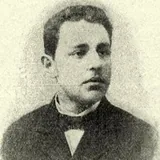
Ossip Bernstein
He was a doctor of law and a financier who never once made chess his trade — and for sixty years he stood among the strongest players on earth all the same. Ossip Bernstein lost three fortunes to three catastrophes: the Revolution took the first, the Crash the second, the Nazi invasion of France the third. And once, in 1918, lined up against a wall in Odessa by a Bolshevik firing squad, he was made to play a single game of chess for his life — and won it. He fled across a continent, rebuilt himself again and again, and at the age of seventy-two sat down in Montevideo and beat one of the best players in the world. He is chess's great amateur and its great survivor: living proof that the game can be at once the ornament of a full and worldly life and, on one impossible afternoon, the thing that saves it.
◈A doctor of law who would not turn professional
Bernstein was born in 1882 in Zhytomyr, in the Russian Empire, into a wealthy Jewish family. He took a doctorate in law at Heidelberg in 1906 and built a career as a financial lawyer — and chess, for him, was always the brilliant avocation rather than the trade. It never made him less dangerous. He shared first prize with Carl Schlechter at Coburg's circle of masters, tied for first with Akiba Rubinstein at the great Ostend tournament of 1907, and by the eve of the First World War was a settled member of the world elite.
The proof came at Saint Petersburg in 1914, one of the strongest tournaments ever held. There, in the preliminaries, Bernstein faced the reigning World Champion Emanuel Lasker — and beat him, very nearly qualifying for the final stage of the event over the greatest player of the age. The financier from Zhytomyr had measured himself against the summit of chess and not been found wanting.
◈The sharp style of a new century
Bernstein played the way the new century felt — fast, sharp, combinative, hunting for imbalance and conflict all over the board. He hated draws as only an attacking player can, and Tartakower credited him with helping to inaugurate the sturm und drang generation that took over the chess world around 1910. His was a skirmishing, restless chess, full of tactics and the pure spirit of play.
He told one story on himself that captures the man entirely. "In one tournament," he recalled, "the veteran master Burn, who was a good friend of mine, offered me a draw on the 12th move. I refused, played for a win and ended up in a completely lost position. For the fun of it, I then offered Burn a draw myself. With his eyes flashing slyly at me through his glasses, he replied frowningly: 'Had you accepted my offer then, I would accept yours now,' upon which I resigned." He kept level scores with Lasker across a lifetime and traded blows with Rubinstein, Nimzowitsch and Capablanca — the best of the best.
◈A game for his life
Then came the catastrophe that turned his story into legend. In 1918, during the Red Terror, Bernstein was arrested in Odessa by the Cheka — the Bolshevik secret police — for having served as a legal adviser to bankers, and was marched out to be shot. As the account has come down, through Edward Lasker and Arnold Denker, a commanding officer scanning the prisoners' papers recognised the name from the Saint Petersburg tournament tables, and could not quite believe a famous master was about to be executed in front of him.
The officer, a chess enthusiast, made a wager of it: one game, here and now. Win, and Bernstein would go free; draw or lose, and the sentence would be carried out. Bernstein won — in short order, the story says — and walked out of the yard a free man, escaping soon after by British ship to the West. Of every game he ever played, it was the only one in which the loser would not have lived to resign.
◈Three fortunes, three catastrophes
He rebuilt his life in Paris and, in time, a fortune — the financier's gift surviving the lawyer's flight. History took it from him again. He lost his first fortune to the Russian Revolution, his second to the Great Depression of the 1930s, and his third when Nazi Germany overran France in 1940; as a Jew he fled once more, this time south to Spain, and settled for a while in Barcelona. Three times the world he had built was swept away, and three times he began again.
Through it all he kept his seat at the high table whenever life allowed. In 1933 he played a training match in Paris against the World Champion Alexander Alekhine and held him to a draw, trading wins. He had begun his career against Chigorin and Schlechter and Rubinstein; he was still, decades on, a man the very best had to take seriously. When FIDE created the Grandmaster title in 1950, Bernstein was among the first players in history to receive it — a bridge in a single life between the nineteenth-century game and the modern one.
◈Montevideo, at seventy-two
The last act was the most improbable of all. In 1954, aged seventy-two and more than four decades past his prime, Bernstein travelled to Montevideo and finished in a tie for second and third place — and in his individual game beat Miguel Najdorf, one of the strongest players in the world, taking a brilliancy prize for the win. Najdorf, the story goes, had protested at being made to face so old an opponent; he would regret it.
That same year Bernstein sat on first board for France at the Amsterdam Olympiad, carrying his country's colours against the best of a new generation. He had played chess for stakes, for honour, for the pure joy of conflict, and once for his life — and at the very end he was still, unmistakably, creating beauty across the board. He died in the French Pyrenees in 1962.
“In one tournament the veteran master Burn, who was a good friend of mine, offered me a draw on the 12th move. I refused, played for a win and ended up in a completely lost position. For the fun of it, I then offered Burn a draw myself. With his eyes flashing slyly at me through his glasses, he replied frowningly: 'Had you accepted my offer then, I would accept yours now,' upon which I resigned.”
“The last of the golden age of chess.”
“He inaugurated the sturm und drang generation that took over the chess world by around 1910.”
◈From the archive
◈Legacy
Ossip Bernstein never gave his life to chess; he gave chess to a life already full of law, finance, exile and ruin — and proved that an amateur, in the deepest sense of the word, could stand among the immortals for sixty years. He beat a reigning World Champion at his peak and another past his own, he survived a firing squad by winning a game, he lost three fortunes to three of the century's catastrophes and rebuilt himself every time, and at seventy-two he was still good enough to win a brilliancy prize against one of the best players alive. Edward Lasker called him the last of the golden age. He is remembered as chess's great survivor — the man who, more literally than any champion, played for his life and won.