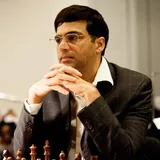
Viswanathan Anand
Before there was an Indian chess revolution, there was one boy from Madras who learned the moves from his mother and played them faster than anyone alive. They called him the Lightning Kid, and the name fit a prodigy who calculated at the speed of intuition — but the deeper truth of Viswanathan Anand is gentler than the nickname suggests. In a sport built on intimidation he won the highest title on earth without ever raising his voice, beating the fiercest competitors of his age through preparation, clarity, and a temperament so even that rivals trusted him enough to help him prepare. He is India's first grandmaster, its first world champion, and the quiet origin of everything that came after.
◈The boy from Madras
Viswanathan Anand was born on 11 December 1969 in Mayiladuthurai, Tamil Nadu, and grew up in Madras — today's Chennai. He learned the game at six from his mother Sushila, a keen chess enthusiast, and sharpened it during the years his family spent in Manila, where his father worked as a railways consultant. From the start his gift was speed: he saw combinations almost before the pieces had settled, and the chess world soon gave him a name for it.
In September 1987, at seventeen, he won the World Junior Championship in Baguio City — becoming the first Asian ever to win a world chess title. The grandmaster title followed in 1988, when he won an international tournament in Coimbatore to become the first Indian grandmaster in history. A country with almost no tradition at chess's summit suddenly had a teenager standing on it.
◈The Lightning Kid
The nickname Lightning Kid was earned over the board, in the blur of his blitz and rapid play, and it pointed at something real: Anand would come to be regarded as the greatest rapid player of his generation, a man who could solve at speed what others needed hours to untangle. But he was no mere fast hand. At the turn of 1991–92 he won the great tournament at Reggio Emilia ahead of both reigning World Champion Garry Kasparov and former champion Anatoly Karpov — a statement that the kid from Madras belonged with the giants.
The climb after that was steady and relentless. In April 2006 he became only the fourth player in history to cross 2800 Elo, and in April 2007 he reached world No. 1, a position he would hold for twenty-one months. His peak rating of 2817 came in March 2011. Across his career he won the Corus/Wijk aan Zee supertournament five times, Linares three times, a record eleven Mainz rapid titles, and the World Rapid Championship in both 2003 and 2017.
◈The long road to the crown
The title itself made him wait. In 1995 he challenged Kasparov for the PCA World Championship atop the World Trade Center in New York, took an early lead, then fell away as the champion struck back — a hard schooling in the difference between brilliance and the championship temperament. Five years later he answered it, winning the FIDE World Championship in 2000 by defeating Alexei Shirov 3½–½ in the final.
But the title in those years was split, and Anand wanted the whole of it. He got it in 2007 at Mexico City, winning the unification tournament with 9/14, undefeated, to become the 15th undisputed World Chess Champion — the first Asian, and the first player to win the title in tournament, match, and knockout formats alike.
◈The reign
What followed was a defence of the crown the old-fashioned way: across the board, in single combat, against the best the world could send. In 2008 at Bonn he beat Vladimir Kramnik 6½–4½, out-preparing the most thorough champion of the age. In 2010 at Sofia, in perhaps his finest hour, he held off Veselin Topalov 6½–5½, winning the final game with the Black pieces under maximum pressure. In 2012 at Moscow he survived a desperately close match with Boris Gelfand — tied after twelve classical games — to keep the title in the rapid tiebreak, 2½–1½.
Only in 2013, in his home city of Chennai, did the crown finally pass, to the young Norwegian Magnus Carlsen; a rematch in Sochi the following year ended the same way. Anand had held the championship for six years and defended it three times — and at an age when most champions had long since faded, he kept right on competing with the elite, winning the Candidates Tournament again in 2014.
◈The gentleman of chess
Anand belonged to no school and to all of them — a universal player whose strength was clarity rather than any single weapon. What set him apart from his fiercest contemporaries was the absence of menace: he refused psychological warfare and gamesmanship, and was so widely trusted that Kasparov, Kramnik, and Carlsen himself all helped his preparation for the 2010 title defence, despite being rivals. "Confidence is very important," he once said, "even pretending to be confident."
Off the board he married Aruna in 1996 — she became his manager and constant second through the championship years — and their son Akhil was born in 2011. India showered him with honours: the inaugural Rajiv Gandhi Khel Ratna, the Padma Shri, the Padma Bhushan, and in 2007 the Padma Vibhushan, the country's second-highest civilian award and never before given to a sportsperson. He won the Chess Oscar six times. Yet for all the medals, what his peers remember is the man: unfailingly modest, endlessly curious, and incapable of unkindness at the board.
“Confidence is very important — even pretending to be confident. If you make a mistake but do not let your opponent see what you are thinking, then he may overlook the mistake.”
“A great result for Anand and for chess. Anand out-prepared Kramnik completely.”
◈From the archive
◈Legacy
Anand did not just win the world championship; he opened a door for a billion people. When he became India's first grandmaster in 1988 the country had almost no chess culture at the elite level — and when he carried the crown home, he sparked a boom that turned India into a superpower of the game. The generation that grew up watching him — Gukesh Dommaraju, R Praggnanandhaa, Arjun Erigaisi, Vidit Gujrathi — trained in academies he inspired, and in 2024 the eighteen-year-old Gukesh became World Champion in his own right, completing the revolution Anand began. Honoured with the Padma Vibhushan, the first sportsperson ever to receive it, and beloved as a model of sportsmanship across every rival camp, Anand is remembered as the champion who proved that the gentlest man in the room could also be the strongest.